Key Takeaways
- Predictive analytics estimates outcomes from past data and works best when tied to a decision you already make.
- Data quality sets the ceiling. Gartner reports that 59% of organizations do not measure it.
- Test every model against a simple baseline, such as last month's actual figure, before you rely on it.
- Packaged forecasting tools can start at a few hundred dollars a month, while a custom build runs into tens of thousands.
- Start with one decision and one owner, then expand.
What Is Predictive Analytics and How Does It Work?
Predictive analytics is a method that finds patterns in past data and uses them to estimate what is likely to happen next. Predictive analytics in business follows one sequence. You collect and clean the data, then build a model on part of it. Testing comes next, on records the model has not seen.
What Is Predictive Modeling?
Predictive modeling is the step where a statistical or machine learning model learns from historical records to estimate a future outcome.
How Does AI Predictive Analytics Work?
AI predictive analytics usually means machine learning models that learn from many variables at once. Vendors often market the same capability as predictive AI. A simple regression might forecast sales from advertising spend and season. A machine learning model can add many more signals, at the price of being harder to explain.
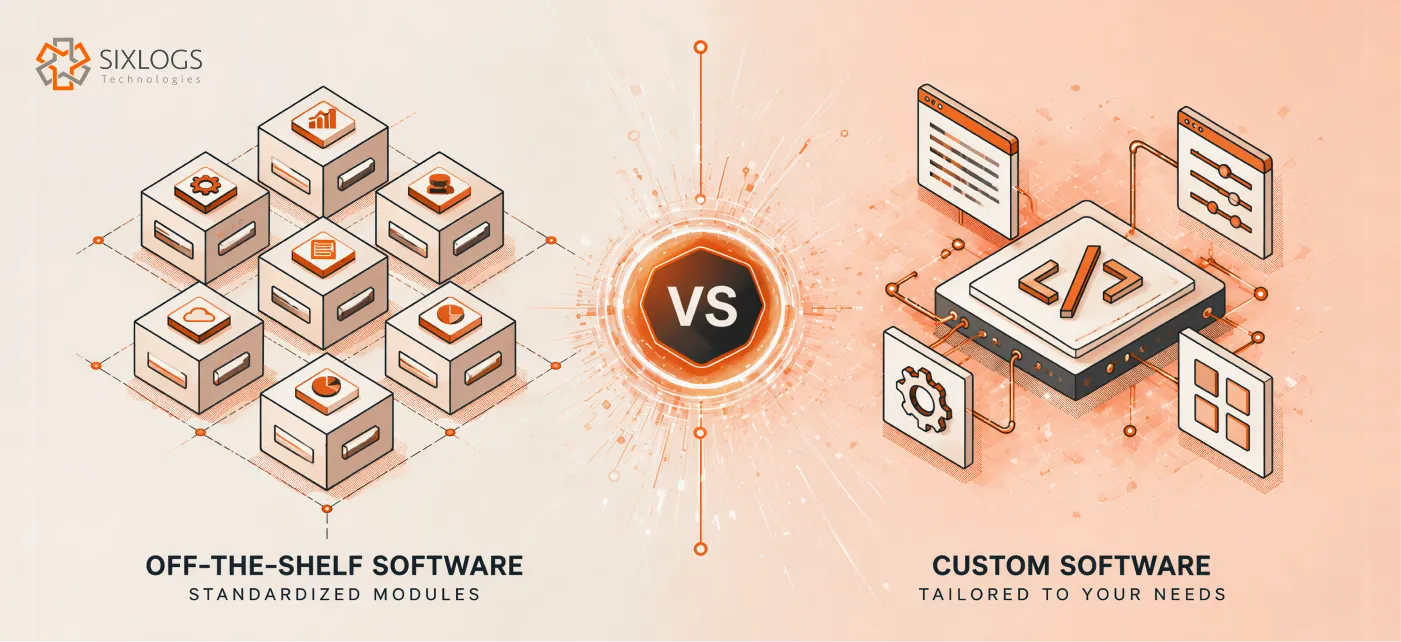
Many teams start with prediction features built into the business systems they already run, such as a CRM or an inventory tool. Business forecasting software covers standard cases, such as a demand forecast from one clean data source. Dedicated predictive analytics software lets a team test one model on exported data before it commits, and adds scheduling and monitoring for repeat use. When inputs sit across several systems, or the output must feed a workflow, custom AI app development becomes a realistic alternative to the packaged option.
A prediction only creates value when something acts on it. A forecast that triggers a stock reorder can run on fixed rules. If the action depends on messy input, weighing AI against traditional automation becomes part of the project.
Predictive Analytics Examples for Business
These predictive analytics use cases show where the payoff is clearest:
- Demand and inventory: Forecasts expected sales by product and period, so reorder timing follows demand.
- Equipment maintenance: Flags machines whose readings resemble earlier failures, so you can repair them first.
- Customer churn: Customer churn prediction scores which customers are most likely to leave, so teams reach out first.
- Revenue planning: Projects pipeline or cash flow under different assumptions.
What Data Do You Need for Predictive Analytics?
You need a history of the outcome you want to predict, recorded the same way each time and covering busy and quiet periods. Each prediction also needs inputs you will have on hand when you act, such as order volume or open ticket counts.
Customer and order records often sit in separate tools and quietly disagree. Resolving data silos between your systems comes before modeling, because a model trained on conflicting records learns the conflict.
Data quality decides how far that history can guide decisions. Gartner research from 2020 puts the average cost of poor data quality at $12.9 million a year for organizations. Treat that as a rough benchmark, not a forecast for your company. The same Gartner page reports that 59% of organizations do not measure data quality and lists inconsistency across siloed sources as a challenge.
Descriptive vs Predictive vs Prescriptive Analytics
Predictive analytics is one of several kinds of analysis. Predictive business intelligence adds forecasts to the dashboards you already use. Each kind builds on the one before it, so accurate reporting comes first.
| Type | Question it answers | Business example |
|---|---|---|
| Descriptive | What happened? | Last quarter's sales by region |
| Predictive | What is likely to happen? | Expected demand for next month |
| Prescriptive | What should we do? | Recommended order quantity per product |
Why Do Predictive Analytics Projects Fail?
Beyond data quality, projects usually stall for four reasons:
- No decision owner: A model that nobody is responsible for acting on becomes a report nobody reads. Name the person who will act on each output before you build.
- Overfitting: A model tuned too closely to past data scores well in testing and poorly on new cases. Keep your most recent records aside for testing.
- Drift: Customer behavior and prices change, so a model loses accuracy unless someone monitors it. Track error each month and retrain when it climbs.
- Weak adoption: Staff ignore predictions they cannot understand or do not trust. Show the inputs behind each prediction so people can check it.
How to Measure Predictive Analytics Benefits
Judge the model against a naive baseline, such as last month's actual figure or a simple average. Choose that baseline before you build, so the comparison stays fair. If a model cannot beat the baseline on data it has not seen, it adds cost without adding value.
Then measure forecasting error, which is the average gap between predicted and actual values, and connect it to a business number. For example, track stockouts and excess inventory for a demand forecast, and retention among contacted customers for a churn model. These gains only count when the decision changes and the business number moves. Report both figures to the decision owner every month.
What Does a Predictive Analytics Project Cost?
Published figures are scarce and mostly come from vendors, so treat them as ballparks. One 2026 vendor guide to demand forecasting software estimates the following. These numbers cover demand forecasting only, not every predictive use case.
| Route | Typical cost | Typical timeline |
|---|---|---|
| Packaged tool, up to about 2,000 products | $250 to $1,200 a month | 2 to 6 weeks for cloud setup |
| Packaged tool, 2,000 to 20,000 products | $1,200 to $7,000 a month | 2 to 6 weeks for cloud setup |
| One-time data preparation and standard integration | $1,500 to $12,000 for data preparation; $2,500 to $7,000 for integration | Included in setup |
| Custom-built forecasting software | $40,000 to $100,000 to build, plus $8,000 to $20,000 a year for hosting, updates, and retraining | Not stated |
How custom and off-the-shelf software compare over five years depends on how fast your usage grows, so price both before you commit.
Predictive Analytics Implementation
Small steps keep the first project measurable. Start with one decision:
- Pick one recurring decision with a clear owner, such as weekly reorder quantities.
- Check that the data behind it is consistent and covers enough history.
- Build a simple baseline first, then test a model against it on unseen data.
- Put the output in front of the decision owner and review results monthly.
- Expand to a second decision only after the first one moves a business number.
Your starting point depends on where you are today:
| Where you are | Where to start |
|---|---|
| Clean history and a clear decision owner | Run a pilot against a baseline |
| History spread across systems that disagree | Reconcile the records first |
| A standard forecast from one clean source | Try packaged forecasting software |
| Inputs from several systems feeding a workflow | Scope a custom build |
Predictive Analytics for Business in 2026
Predictive analytics pays off when it answers one decision you already make, on data you can trust. Pick that decision and test a model against a baseline before you build further.
To scope a first use case with your own data, explore our AI and business intelligence solutions.